Title
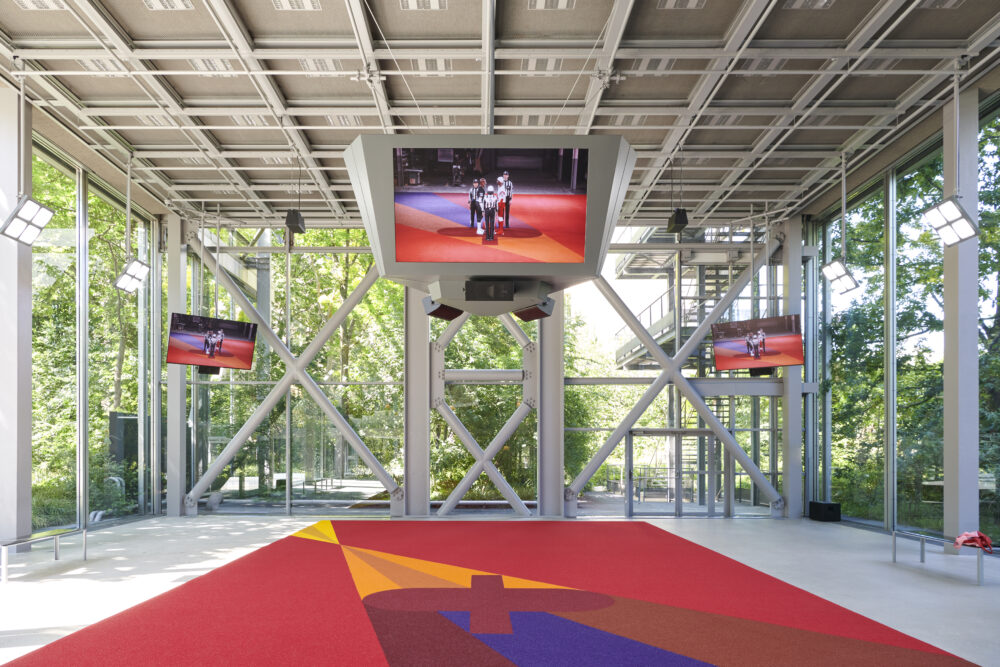
Echoes of Silence
Artist
Alexandra Mitchell
Year
2023
Medium
Video Art
Duration
15 minutes
Genre
Experimental
Exhibition History
Displayed at the Contemporary Art Museum, New York (2023); International Video Art Festival, Berlin (2024)
Awards
Best Experimental Video, Art Vision Awards (2024)
Technical Details
4K Ultra HD, Stereo Sound
URL
https://www.alexandramitchellart.com/echoes-of-silence
Related Works
Whispers in the Void, Fractured Echoes
Gallery
Gallery XYZ, London
1. INTRODUCTION
1.1 Goal
In the last few decades, scientists have learned how to manipulate the basic components of life, how to design biomolecular networks, how to evolve biomolecules with unique characteristics and how to direct and control cellular processes at the molecular level. Using this knowledge as a foundation, it is theoretically possible to conceive of designing biological constructs, which we refer to as cell-like entities (CLEs), that use custom engineered biological machinery to accomplish specified tasks. The practical challenge is: Can we fabricate biological constructs for specific purposes using the same principles and components found in natural biological systems? For example, can CLEs be designed to detect very low levels of specific chemicals and fluoresce to indicate their presence; can they be designed to synthesize functional chemicals on demand, or can they use engineered metabolic pathways to detoxify environmental pollutants? The building of CLEs that could accomplish these goals would result in fundamental breakthroughs in exploiting our understanding of cellular control systems and biochemical information processing.
The concept of the CLE is based on understanding how the biochemical reactions network that we call a living cell functions, how is it controlled and what are the key processes and components that will provide unique functions when integrated. The goal is not to create a living organism, but to create a biological construct that utilizes the essence of living systems to provide a wide array of solutions to current technological and medical challenges
1.2 Definition of Non-Living/Living
This co-containment allowed for the parallel evolution of biochemical processes and the information that defines those processes. Although there are significant differences of opinion as to the definition of what constitutes "living", there are several characteristics of living organisms that all agree are components of life.
10:44 AM · Sep 17, 2023 · 1,089 Views
The emergence of cellular life is one of the major transitions in history. The critical factor was the establishment of a closed boundary encapsulating catalytic reactions and genetic information in a well-defined compartment. This co-containment allowed for the parallel evolution of biochemical processes and the information that defines those processes. Although there are significant differences of opinion as to the definition of what constitutes "living", there are several characteristics of living organisms that all agree are components of life. First, living organisms are open dynamical systems - energy and matter flow across the physical boundary of the system in both directions. The internal components of the organism are not in equilibrium and can be characterized as a quasi-steady state, but are subject to major state transitions. Compared to macro chemical systems, the behavior of cellular reactions at the molecular level is unique in several ways. Processes such as diffusion, binding and catalysis occur in parallel within a confined three dimensional micro volume. Many of these processes are stochastic in nature and this stochastic behavior often contributes to functionality (McAdams and Arkin, 1997). Second, living organisms can reproduce. Their physical structure and information content are passed on from generation to generation and in theory the lineage of any given cell can be traced back to its primordial ancestor. The physical structure of a living organism persists in time although it may undergo significant transformations.
1.3 Useful components and functions of cells
Remote viewing was popularized in the 1990s, following the declassification of documents related to the Stargate Project, a 20 million dollar research program that investigated the potential for psychic phenomena in military and domestic intelligence applications.
10:44 AM · Sep 17, 2023 · 1,089 Views
History 3
Remote viewing was popularized in the 1990s, following the declassification of documents related to the Stargate Project, a 20 million dollar research program that investigated the potential for psychic phenomena in military and domestic intelligence applications.
History 4
Remote viewing was popularized in the 1990s, following the declassification of documents related to the Stargate Project, a 20 million dollar research program that investigated the potential for psychic phenomena in military and domestic intelligence applications.
History 5
Remote viewing was popularized in the 1990s, following the declassification of documents related to the Stargate Project, a 20 million dollar research program that investigated the potential for psychic phenomena in military and domestic intelligence applications.